
Why build a ship this big?
More oil in one voyage
Seawise Giant was an oil-transport project, not a passenger ship or a ship built simply to win a record. Larger tankers spread the cost of a long voyage across more cargo. That was the commercial logic behind the era of ultra-large crude carriers.93
An already large hull, made larger
The original order was interrupted after the oil-market downturn. C. Y. Tung bought the hull and had it lengthened, increasing its carrying capacity. Its extraordinary size was a business decision as well as an engineering feat.10
Where did it travel?
From Japan to the Persian Gulf, Europe and India. These are documented places in the ship’s history, not a complete itinerary or a recorded route across the sea.
Historic and shipyard pins indicate approximate areas, not exact berths or navigable routes. Current-vessel pins, when available, show timestamped AIS reports. A missing report does not establish a vessel’s location.
- Construction
Yokosuka, Japan
Built at Sumitomo’s Oppama yard on Tokyo Bay, now known as Yokosuka Shipyard.67
- 1988
Larak Island, Iran
Damaged in an air attack while operating in the Persian Gulf.6
- Repairs before return to service
Singapore
The damaged vessel was taken to Singapore for repairs.6
- 1995
Antifer, France
Photographed at Antifer under the name Jahre Viking, documenting a visit to northern France.4
- 2004 conversion
Dubai, United Arab Emirates
Converted at Dubai into a floating storage and offloading vessel.11
- 2004–2009
Al Shaheen field, Qatar
Moored offshore as Knock Nevis, storing and offloading oil for Maersk Oil Qatar.45
- Final voyage and dismantling
Alang, India
Renamed Mont for the final voyage; dismantled at Alang in 2010.2
Built in Japan. Scrapped in India.
The places at either end of this vessel’s life, photographed after its working years.62
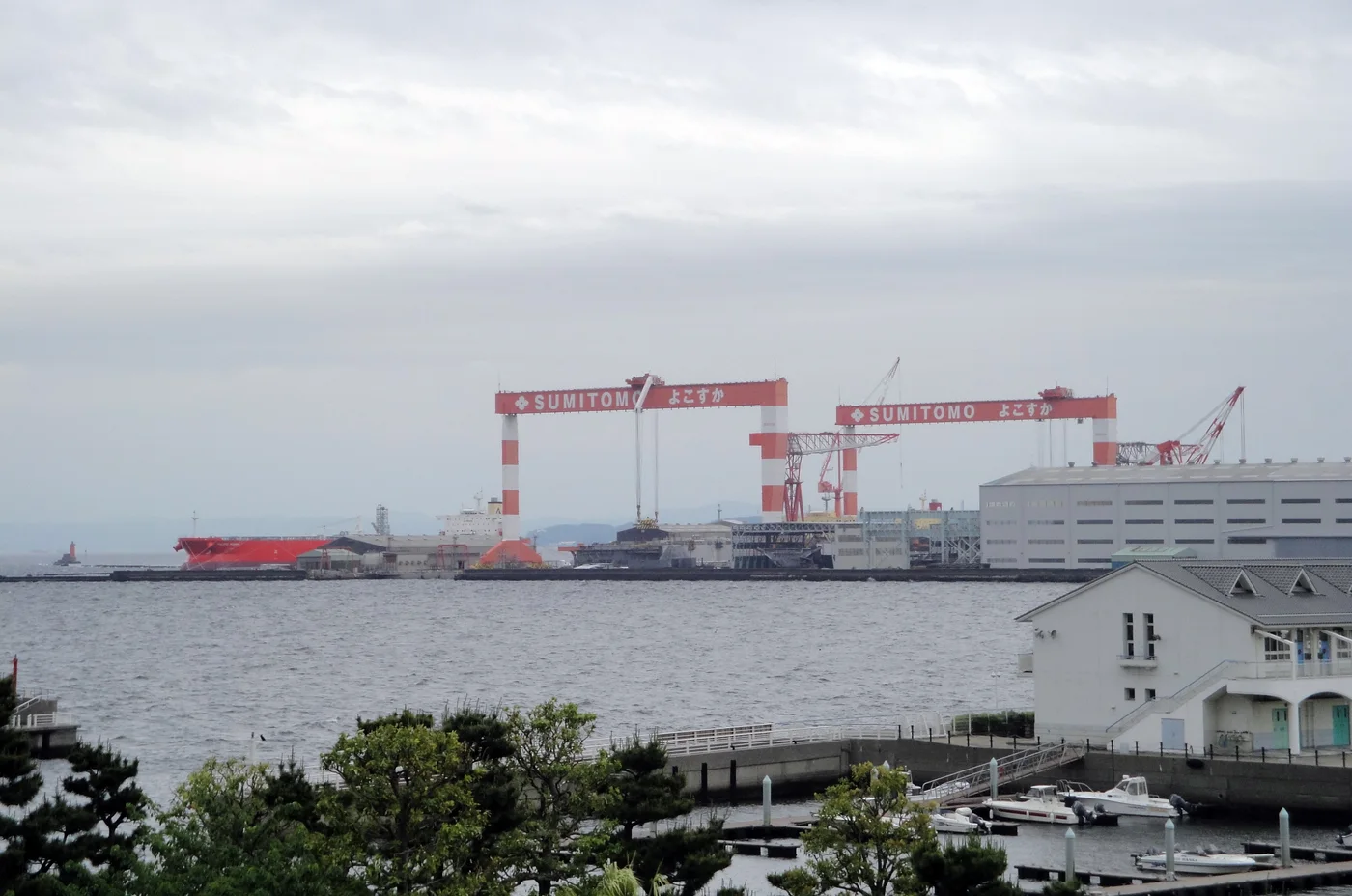
Sumitomo’s Yokosuka shipyard in May 2011. This later photograph shows the yard, not Seawise Giant under construction.
村上 敦 / Wikimedia Commons · CC BY-SA 2.1 Japan. Brightness previously adjusted on Commons by トトト. Resized and converted to WebP; responsive crop.

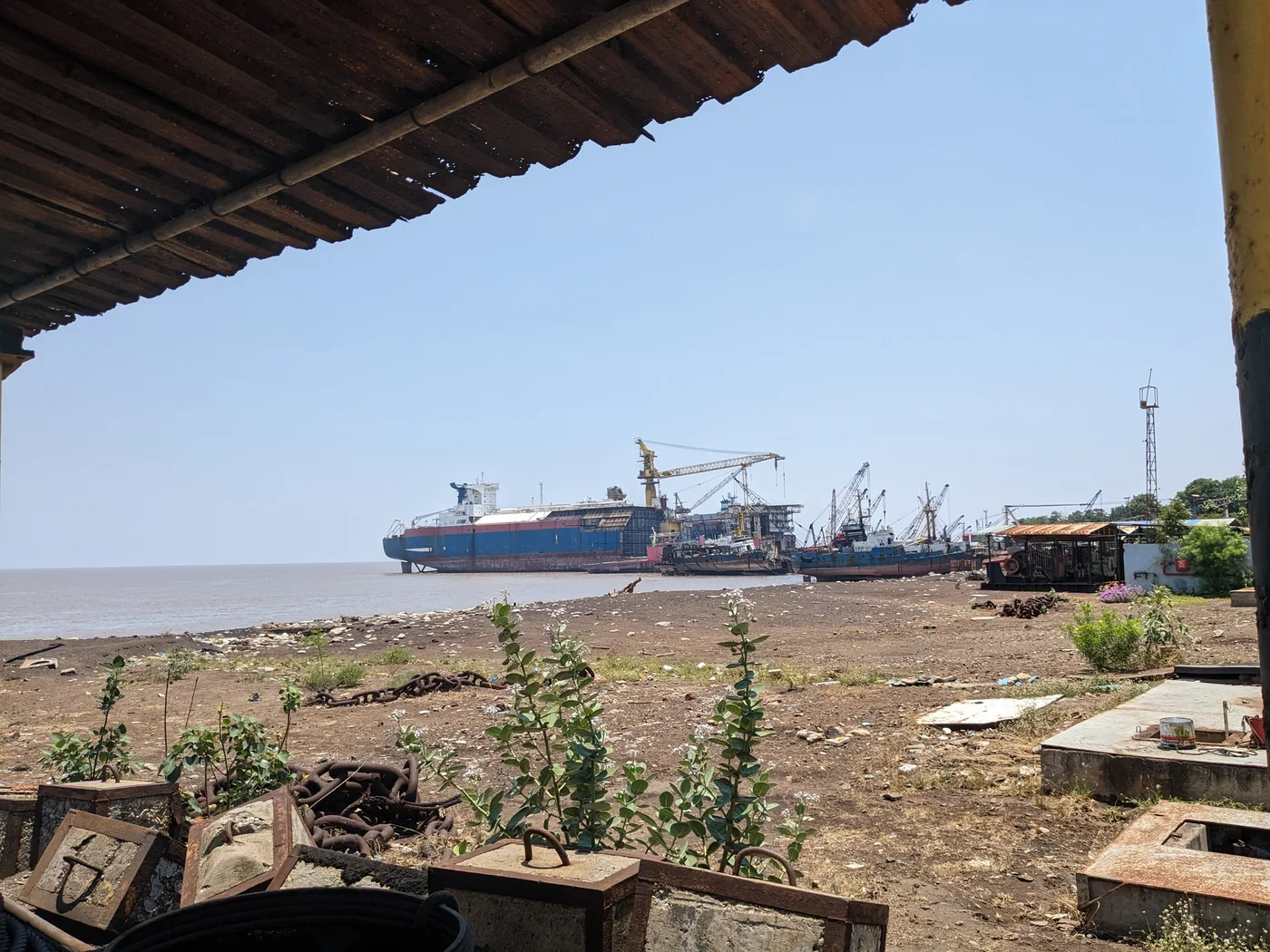
Ship recycling at Alang in May 2023. The vessels pictured are not Seawise Giant.
Neilsatyam / Wikimedia Commons · CC BY-SA 4.0. Resized and converted to WebP; responsive crop.

What remains today?
The vessel no longer exists, but its anchor survives in Hong Kong. The Maritime Museum’s Anchor Plaza opened to the public in November 2025, giving part of the ship a permanent place on the waterfront.8
The ship, in numbers
Record dimensions and published particulars. Imperial lengths are converted from the cited metric values.
| SPECIFICATION | METRIC | CONTEXT / CONVERSION |
|---|---|---|
| Length overall | 458.45 m13 | 1,504.10 ft |
| Beam | 68.80 m4 | 225.72 ft |
| Laden draught | 24.61 m4 | 80.74 ft |
| Moulded depth | 29.80 m4 | 97.77 ft |
| Gross tonnage | 260,941 GT4 | Enclosed volume index |
| Maximum deadweight | 564,763 t23 | Carrying capacity |
| Net tonnage | 214,793 NT4 | Cargo volume index |
| Reported service speed | 16.5 kn6 | 30.6 km/h |
Gross tonnage is an index of enclosed volume, not weight. Specifications span the enlarged tanker and later storage configuration. See the data notes ↓
A place in the record books
Longest self-propelled ship
458.45 metres
Historical records, checked 8 September 2026. Seawise Giant is no longer in service. Exact succession dates are withheld while the lengthening chronology is reconciled.
One hull. Many lives.
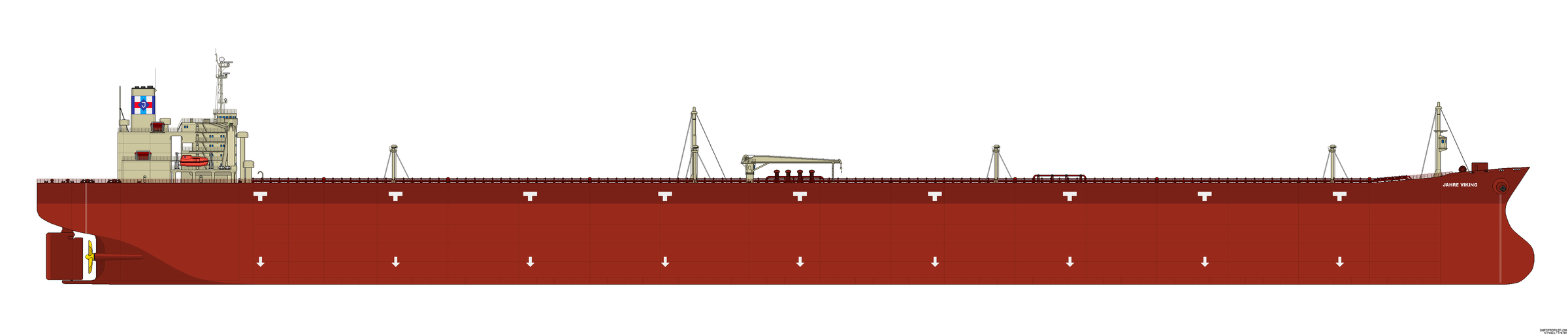
Seawise Giant was built to move crude oil on an extraordinary scale. An added cargo section made an already enormous tanker longer still. Its size also limited where it could operate. Later, as Knock Nevis, it found a new role storing and offloading oil off Qatar. 35
Damaged in the Gulf
An Iraqi air attack caused extensive fire damage. The ship was later repaired in Singapore.6
Back at sea
Returned to service, briefly named Happy Giant before becoming Jahre Viking.6
The final chapter
Renamed Mont for its last voyage, the tanker was dismantled at Alang, India.2
Happy Giant · Jahre Viking · Knock Nevis · Oppama · Mont2
Reading the numbers
Good records need context. Here is what the figures do, and do not, tell us.
Which “largest”?
Length, carrying capacity and enclosed volume measure different things. This page identifies the self-propelled ship length record and the historical deadweight record, not a current operating vessel or a gross-tonnage record.12
Specifications depend on the date
Guinness records a maximum deadweight of 564,763 tonnes. The later Knock Nevis particulars report 564,650 tonnes. The beam here follows those particulars at 68.80 metres; Wikipedia lists 68.6 metres. These figures are not silently combined into a claim about one surveyed condition.246
Follow the sources
Every specification links to its reference. The headline records are checked against two independent publishers.
- 01
- 02Guinness World RecordsLargest ship (deadweight tonnage)
Maximum deadweight, former names and scrapping at Alang.
- 03Lloyd’s Register FoundationMaritime science and technology: changing our world
Independent confirmation of length and deadweight; dates the additional cargo section to 1980.
- 04Marine Marchande / Jacques DraoulecLa fin du plus grand bateau du monde, le Knock Nevis
IMO number, beam, draught, depth, gross and net tonnage; floating-storage conversion. Reports a different later deadweight.
- 05Ganger Rolf / Fred. Olsen ProductionAgreement to upgrade Knock Nevis
Primary operator announcement confirming storage operations at Al Shaheen and the contract through 2009.
- 06WikipediaSeawise Giant
Supporting chronology, machinery, speed and selected flag history. Not used as the sole source for the headline records.
- 07Sumitomo Heavy Industries Marine & EngineeringHistory and evolution
Oppama shipyard was established for larger merchant ships and is now known as Yokosuka Shipyard.
- 08Hong Kong Maritime MuseumHong Kong Maritime Museum Jockey Club Anchor Plaza
The surviving Seawise Giant anchor and the public plaza that opened in November 2025.
- 09Routledge / Taylor & FrancisIntroduction to Oil Tanker and Gas Carrier Operations
Historical context: larger tankers were designed to offset the costs of longer voyages.
- 10Maritime Reporter / MarineLinkMaritime Reporter, January 2004: The Shipbuilding Report
The original order, interruption after the oil-market downturn, and C. Y. Tung’s purchase and lengthening of the hull.
- 11Shipspotting / United_World_MarineKnock Nevis at Dubai Drydocks, 26 May 2004
Dated photograph documenting the 2004 conversion at Dubai. Linked as evidence; photograph not reproduced.
Illustration & reuse
Jahre Viking: illustrated side profile of Seawise Giant under its later name. Illustration by Shipsprofiler, via Wikimedia Commons. Licensed under CC BY-SA 3.0. Resized and converted to WebP. Illustration, not a photograph. The image retains its original license.