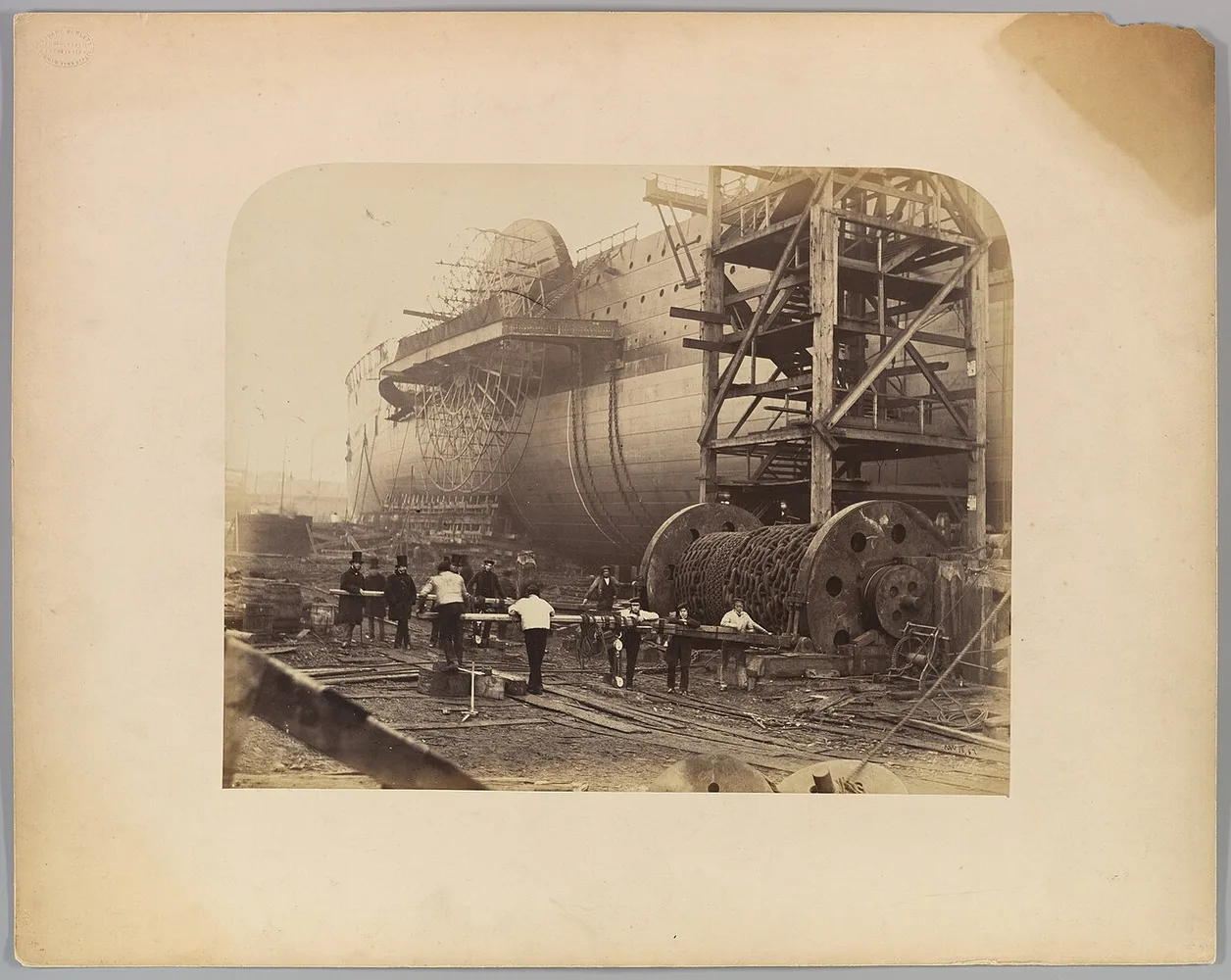

Built for a purpose
- Builder / location
- John Scott Russell’s yard, Millwall, London
- Original role
- Long-distance passenger steamship; later cable work
Why it was built
Great Eastern was Brunel’s attempt to change the scale of ocean steam travel. The Brunel Museum explains that the ship could carry enough coal for a journey from England to Australia and back without refuelling. Fuel endurance was therefore part of the reason for the extraordinary hull size, rather than simply a desire to set a length record.
A launch shaped by the river
The ship was built on the Isle of Dogs and launched sideways in 1858 because the Thames did not provide enough width for a conventional launch of such a long hull. Remains of the launch site survive. This is a particularly clear example of a vessel’s size forcing changes in how it was built and handled ashore.
A different measure of significance
Great Eastern later became associated with Atlantic cable laying. Its historical importance therefore extends beyond the passenger trade for which it was conceived. The directory leaves modern gross tonnage unassigned: a nineteenth-century gross-register-tonnage figure cannot simply be relabelled GT for comparison with today’s ships.
Brunel Museum: the ship and its legacy ↗Measurement methodology ↗
Historical information reviewed 9 September 2026. Documented journeys are not live vessel positions.